
High-Performance Metal Coatings
Are you looking for Surface Enhancement Coatings in South Africa?
Coating items/tooling can enhance their lifespan by 200% to 300%.

Why Use Surface-Enhanced Components?
Our advanced coatings—such as PVD—are designed to increase the durability, reliability, and efficiency of not only tooling, but a wide range of components across multiple industries. Whether you’re protecting precision-engineered tools, high-wear mechanical parts, or critical production elements, our coatings reduce friction, resist heat and corrosion, and extend service life—ultimately lowering maintenance costs and downtime.
Benefits at a Glance:
- Increased surface hardness for improved wear resistance
- Reduced friction and better sliding performance
- Enhanced resistance to heat, oxidation, and corrosion
- Extended service life of components in demanding environments
- Improved dimensional stability with minimal material build-up
- Lower maintenance requirements and reduced downtime
Did you know?
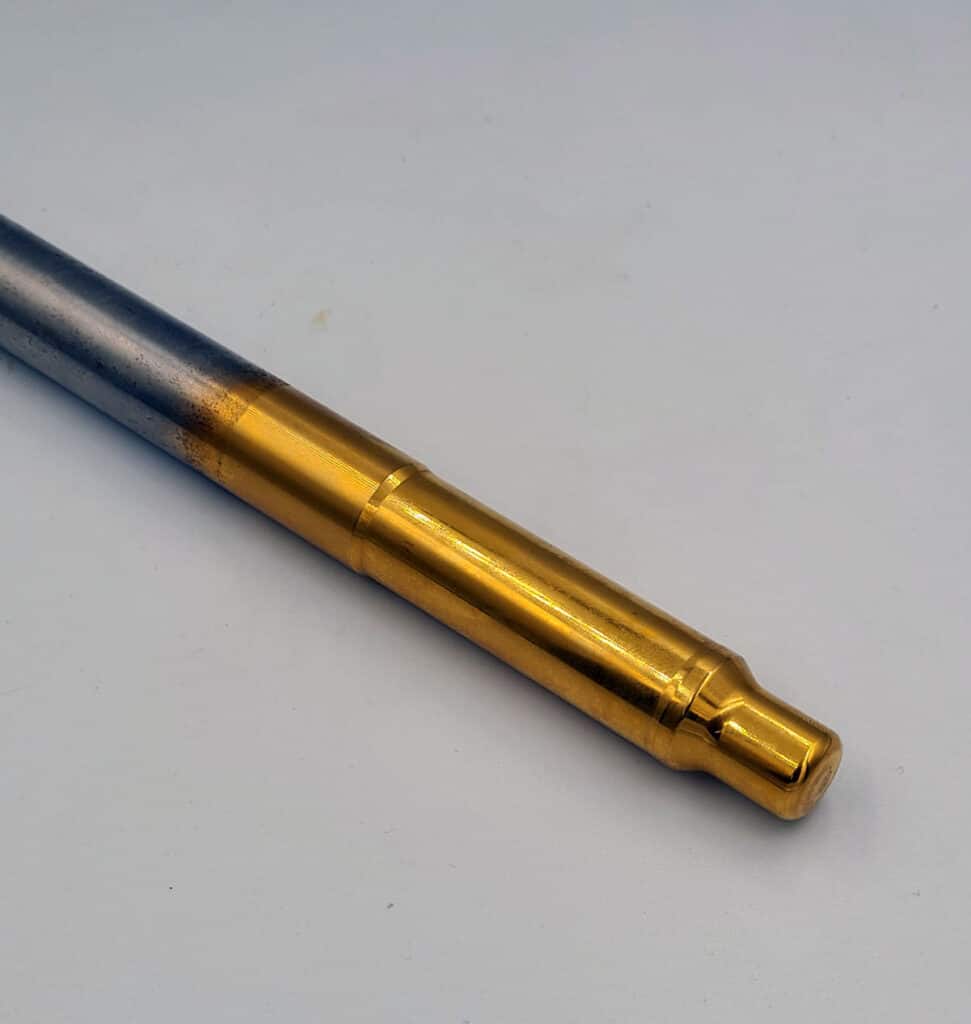
A PVD-coated punch can last up to 300% longer than an uncoated one—reducing replacement frequency, minimising downtime, and cutting long-term costs.
It’s a simple upgrade with a powerful return on investment.
Explore Our Coating Solutions
Not sure which coating is right for your application? No problem!
Browse our range of high-performance coating options below—and if you’re unsure where to start, our team is here to help. With years of hands-on experience, we’ll guide you to the right solution for your tools, components, and operating conditions.
Hard Chrome Plating
Need parts that can withstand extreme wear, reduce friction, or resist corrosion?
Hard chrome plating provides a highly durable surface finish by electroplating a thick layer of chromium onto metal components. Commonly used in automotive, aerospace, and hydraulic applications, it’s ideal for extending part life and performance under high-stress conditions.
- Improve wear resistance for high-friction parts
- Enhance surface hardness to extend component life
- Reduce friction with a low coefficient of friction
- Protect against corrosion in harsh environments
- Restore worn parts to original specifications
- Improve performance in high-stress industrial applications
Flash Chrome
When you need a sleek, polished finish with light corrosion resistance—without adding bulk—flash chrome plating is the ideal solution.
This efficient electroplating process applies a very thin layer of chromium to enhance the appearance of components while providing a protective surface. It’s perfect for parts where aesthetics matter, and dimensional precision must be maintained.
- Bright, reflective finish for enhanced appearance
- Light corrosion resistance for surface protection
- Minimal thickness (approximately 2.5 to 5 microns), preserving tight tolerances
- Commonly used in automotive trims, household fixtures, and consumer electronics
- Suitable for non-wear surfaces where aesthetics and light protection are required
Thin Dense Chrome (TDC)
When you need a hard, corrosion-resistant coating that adds minimal thickness and maintains tight tolerances, Thin Dense Chrome (TDC) is an excellent choice. Unlike traditional chrome plating, TDC provides a dense, uniform layer that improves wear resistance, reduces friction, and enhances part performance without significant dimensional change. It’s ideal for precision components in high-wear, high-load, or low-lubrication environments.
- Extremely thin (2–25 microns) and uniform coating
- Preserves part dimensions and tight tolerances
- High surface hardness (up to ~70 HRC) for excellent wear resistance
- Low coefficient of friction for improved sliding and reduced galling
- Corrosion and chemical resistance in harsh environments
- Commonly used on valves, pins, shafts, punches, moulds, and dies
- Suitable for dry or low-lubrication applications
Salt Bath Nitriding
When enhanced surface hardness, wear resistance, and fatigue strength are needed, salt bath nitriding is a highly effective solution. This thermal-chemical treatment diffuses nitrogen into the surface of metal components by immersing them in a molten salt bath at 500–600°C. The process forms a tough, wear-resistant layer without significantly affecting core properties or dimensions.
- Increases surface hardness and wear resistance
- Enhances fatigue strength and corrosion resistance
- Maintains core toughness with minimal dimensional change
- Ideal for automotive, aerospace, and precision tooling applications
- Commonly used on gears, shafts, dies, and other high-stress parts
- Suitable for complex-shaped components needing uniform treatment
Gas Nitriding
When you need to enhance wear resistance, fatigue strength, and surface hardness—especially for precision components like gears, crankshafts, and dies—gas nitriding is a reliable choice.
- Uses ammonia gas at high temperatures (typically 500–550°C)
- Nitrogen diffuses into the metal surface to form hard nitrides
- Produces a wear-resistant, corrosion-resistant, and fatigue-resistant surface
- No dimensional change—ideal for precision parts
- Commonly used on steels, especially tool and alloy steels
- Suitable for gears, crankshafts, dies, and automotive components
Plasma (Ion) Nitriding
When your parts require high surface hardness with minimal distortion—such as complex molds, tools, or components with tight tolerances—plasma nitriding offers a precise and efficient solution. Using an electrically charged nitrogen gas in a vacuum chamber, it creates a durable, uniform nitrided layer with excellent control and low environmental impact.
- Lower distortion risk compared to other nitriding methods
- Environmentally cleaner with reduced gas usage
- Allows selective nitriding (masking possible)
- Ideal for precision tools, molds, and high-performance components
Hot-dip galvanizing
When you need long-lasting protection against rust and harsh outdoor conditions—especially for large or complex metal parts—hot-dip galvanizing is a highly effective solution. This process involves immersing the component in a bath of molten zinc, which bonds to the surface through a metallurgical reaction, creating a durable, corrosion-resistant coating that performs well in demanding environments.
- Provides strong, long-term corrosion protection
- Ideal for outdoor or exposed applications
- Suitable for large or complex-shaped components
- Coating thickness varies but typically ranges from 50 to 200 microns
- Commonly used in construction, agriculture, infrastructure, and industrial equipment
- Creates a tough, abrasion-resistant finish that also self-heals minor scratches or damage
Electroplating (Zinc Plating)
When working with smaller or intricately shaped components that require corrosion protection and a clean, uniform finish, electroplating is an ideal choice. This process involves depositing a thin layer of zinc onto the metal surface using an electric current in a plating bath. It’s widely used for both functional protection and visual appeal, particularly where precision and detail are important.
- Good corrosion resistance for everyday and indoor environments
- Clean, consistent finish suitable for aesthetic applications
- Ideal for small or detailed components
- Typically applied in thinner layers than hot-dip galvanizing (5 to 25 microns)
- Common in electronics, automotive fasteners, hardware, and appliances
- Allows for secondary finishes like passivation or chromating for added protection
Mechanical plating
When you need a uniform, durable zinc coating for small or complex-shaped components—without the risk of hydrogen embrittlement—mechanical plating is a reliable solution. This process involves tumbling metal parts in a mixture of zinc powder, glass beads, and a bonding agent, where impact mechanically bonds the zinc to the surface. It’s especially useful for high-volume production of fasteners and delicate parts.
- Uniform zinc coating on parts with complex geometries
- Reduces risk of hydrogen embrittlement (ideal for high-strength steel parts)
- Suitable for small to medium-sized components
- Typical coating thickness ranges from 10 to 75 microns
- Commonly used for fasteners, springs, clips, and hardware
- Excellent for batch processing and high-volume applications
Gun-Kote Coatings
When you need a tough, high-performance finish that withstands heat, corrosion, and harsh conditions, Gun-Kote is an excellent choice. Originally developed for firearms, this high-temperature-cured coating offers lasting protection, chemical resistance, and smooth surface performance. It’s ideal for both functional durability and a professional finish on metal components.
- Excellent corrosion and chemical resistance
- Withstands high temperatures and dissipates heat effectively
- Protects against wear, scratches, and abrasion
- Suitable for firearms, precision tools, and other exposed metal components
- Cured for long-lasting durability in demanding environments
- Offers a sleek, professional appearance in various colours and finishes
Teflon-Containing Coatings
When you need a smooth, non-stick surface that resists heat, chemicals, and abrasion, Teflon-containing coatings offer an ideal solution. These coatings use PTFE (commonly known by the brand name Teflon) to create a low-friction barrier that prevents the build-up of oil, grease, and other contaminants—making them perfect for components requiring clean, efficient, and low-maintenance operation.
- Creates a non-stick, low-friction surface
- Excellent resistance to chemicals and high temperatures
- Reduces wear and abrasion on moving parts
- Prevents the build-up of oils, grease, and contaminants
- Ideal for industrial machinery, food processing equipment, and sliding or rotating components
- Enhances cleanliness and extends component life in demanding environments
Chemical Blackening (Black Oxide Coating)
When you need a corrosion-resistant, visually appealing finish that won’t alter part dimensions, chemical blackening—also known as black oxide coating—is an excellent choice. This process creates a thin, dark iron oxide layer on ferrous metals through a controlled chemical reaction, offering a durable, low-glare finish with added lubricity and wear resistance. It’s especially useful for components requiring both performance and aesthetics without added thickness.
- Thin, uniform coating that maintains critical dimensions
- Provides mild corrosion resistance (often used with oil or wax for enhanced protection)
- Enhances lubricity for smoother assembly and operation
- Ideal for decorative or low-reflection finishes
- Commonly used on tools, fasteners, firearms, and machinery parts
- Cost-effective alternative to black paint or other coatings for ferrous metals
TiN Coating – PVD
Titanium Nitride Coating
When extreme hardness, wear resistance, and a long-lasting finish are essential, titanium nitride (TiN) coating delivers outstanding performance. Applied through physical vapor deposition (PVD), this ultra-thin, gold-coloured layer bonds to the surface at a molecular level, enhancing durability without altering part dimensions. TiN is widely used in high-speed tooling, precision components, and cutting instruments where surface performance is critical.
- Exceptional surface hardness and wear resistance
- Thin coating (typically 1–5 microns) that preserves tight tolerances
- Reduces friction and improves cutting efficiency
- Provides a striking gold finish with anti-stick properties
- Extends tool life in high-speed and high-heat environments
- Commonly used for drills, end mills, punches, dies, and medical instruments
TiCN Coating – PVD
Titanium Carbonitride Coating
When you need enhanced wear resistance with lower friction than standard TiN coatings, TiCN (Titanium Carbonitride) is a high-performance option. Applied using Physical Vapor Deposition (PVD), TiCN forms a thin, hard film composed of titanium, carbon, and nitrogen. This coating improves tool life and cutting performance, especially in demanding applications involving high-speed machining or interrupted cuts.
- Superior hardness and wear resistance compared to TiN
- Lower coefficient of friction for smoother cutting and longer tool life
- Thin-film coating (typically 2–4 microns) that maintains tight tolerances
- Excellent for high-speed or high-feed machining
- Ideal for punching, forming, and cutting tools used in tougher materials
- Suitable for steel, stainless steel, and cast iron applications
TiAlN Coating – PVD
Titanium Aluminum Nitride Coating
When extreme heat resistance and durability are essential—especially in dry or high-speed machining—TiAlN (Titanium Aluminium Nitride) coating is a proven solution. Applied using Physical Vapor Deposition (PVD), this thin film enhances the performance and lifespan of cutting tools and precision components. Its ability to form a protective aluminium oxide layer during use makes it ideal for applications with high thermal loads.
- Excellent heat and oxidation resistance
- Forms a protective aluminium oxide layer at high temperatures
- Ideal for dry machining (without coolant)
- High hardness and wear resistance
- Thin coating (typically 2–4 microns) that maintains part tolerances
- Commonly used on end mills, drills, inserts, and high-speed cutting tools in aerospace, automotive, and general engineering
AlCrN Coating – PVD
Aluminium Chromium Nitride Coating
When your tools need to perform under extreme mechanical and thermal stress, AlCrN (Aluminium Chromium Nitride) coating offers exceptional protection. Applied using Physical Vapor Deposition (PVD), this thin film coating provides outstanding wear resistance, thermal stability, and oxidation resistance—making it ideal for high-performance machining and forming applications, especially in dry or semi-dry conditions.
- High wear resistance under intense mechanical stress
- Excellent thermal and oxidation resistance at elevated temperatures
- Ideal for dry and high-speed machining
- Thin and uniform coating (typically 2–4 microns), preserving dimensional accuracy
- Commonly used for cutting tools, moulds, dies, and high-stress forming components
- Suitable for materials such as hardened steels, cast iron, and high-alloy metals
CrN Coating – PVD
Chromium Nitride Coating
When you need a hard, wear-resistant surface that performs under high temperatures and impact, CrN (Chromium Nitride) coating is an excellent choice. Applied through Physical Vapor Deposition (PVD), this ceramic coating provides a combination of high hardness, low friction, and thermal stability—making it ideal for demanding industrial applications.
- Excellent wear resistance and high surface hardness
- Low coefficient of friction for reduced tool wear
- Strong performance in high-temperature and high-impact environments
- Thin, uniform layer (typically 2–4 microns) preserves part tolerances
- Commonly used in aerospace, automotive, and precision manufacturing
- Ideal for cutting tools, injection molds, dies, and forming tools
CrC Coating – PVD or Thermal Spray
Chromium Carbide
When protection against abrasive wear and corrosion is critical, CrC (Chromium Carbide) coating delivers robust surface performance. Applied via PVD or thermal spraying, CrC forms a hard, corrosion-resistant layer that extends the lifespan of components exposed to harsh mechanical or environmental conditions.
- High hardness and superior abrasion resistance
- Excellent protection against corrosion and chemical exposure
- Suitable for heavy-duty applications in tough environments
- Commonly used for cutting tools, extrusion dies, and wear parts
- Popular in heavy machinery, oil and gas equipment, and metal forming industries
DLC Coating – PVD or CVD
Diamond-Like Carbon
When ultra-low friction, exceptional hardness, and high wear resistance are required, DLC (Diamond-Like Carbon) coatings are a top-performing solution. These coatings combine the surface properties of diamond with the versatility of thin film technology, offering a hard, smooth protective layer that significantly enhances the durability and efficiency of components. DLC is commonly applied using Physical Vapor Deposition (PVD) or Chemical Vapor Deposition (CVD) techniques.
- Extremely low coefficient of friction for reduced wear and heat buildup
- High surface hardness for long-lasting durability
- Smooth finish that enhances performance and appearance
- Excellent wear and abrasion resistance
- Suitable for automotive parts, aerospace components, medical instruments, and high-precision tooling
- Can be applied to metals, ceramics, and some plastics without affecting part dimensions
Build-Up Coatings (Overlay or Hardfacing Coatings)
When components are exposed to extreme wear, abrasion, impact, or erosion, build-up coatings—also known as overlay or hardfacing coatings—offer a reliable way to restore and reinforce their surfaces. These coatings involve depositing a layer of material onto a part to enhance its durability, hardness, or corrosion resistance. Depending on the application and substrate, the layer may be applied using techniques such as welding, thermal spraying, or cladding, and can include metals, ceramics, or composite materials. Commonly used in heavy-duty industries like mining, agriculture, energy, and manufacturing, build-up coatings are essential for extending the life of critical components operating under harsh conditions.
Types of Build Up Coatings
Chromium Carbide Overlay
- A protective coating applied to metal surfaces to resist severe abrasion
- Made from a mix of chromium and carbide particles for extreme hardness
- Ideal for environments with heavy wear and moderate impact
- Commonly used in mining, cement, agriculture, and power generation
- Applied to parts like wear plates, chutes, hoppers, and liners
- Helps extend the service life of equipment in harsh conditions
Thermal spray coating
- A coating process that sprays melted or heated materials onto a surface
- Used to improve wear resistance, corrosion protection, or thermal insulation
- Suitable for metal, ceramic, or polymer-based coatings
- Ideal for restoring worn parts or enhancing new components
- Commonly used in aerospace, power generation, automotive, and manufacturing
- Helps extend part life and improve performance in demanding environments
Hardfacing Welding
- A welding process that adds a wear-resistant layer to metal surfaces
- Protects parts from abrasion, impact, and erosion
- Can be applied using MIG, TIG, stick welding, or open arc methods
- Ideal for high-wear components like blades, buckets, rollers, and crushers
- Commonly used in mining, construction, agriculture, and heavy industry
- Extends equipment life and reduces downtime in harsh working conditions
Polymer Overlays
- Protective coatings made from durable polymer materials
- Provide resistance to corrosion, chemicals, moisture, and abrasion
- Offer a non-stick, smooth surface ideal for flow and hygiene
- Lightweight and flexible compared to metal-based coatings
- Commonly used in food processing, chemical plants, water treatment, and packaging machinery
- Help extend component life and improve cleanliness in sensitive environments
Cladding
- A process that bonds a protective material to the surface of a component
- Enhances resistance to corrosion, heat, and wear
- Can be applied using methods like roll bonding, explosive bonding, or welding
- Often used when the base material lacks the surface properties needed for harsh environments
- Common in industries like oil and gas, power generation, chemical processing, and marine
- Extends service life while maintaining the strength of the underlying material