Engineering in South Africa
Start of engineering in Johannesburg.
Engineering in Johannesburg South Africa began after finding gold and diamonds in the Transvaal.
Engineering Boom South Africa
Engineering in South Africa boomed after the discovery of large mines containing gold and diamond reserves in the Transvaal and Orange Free State republics which Now falls under Gauteng and Free State. With large amount of mining supplies needed and mines that need to be built, the need for all types of engineers grew. The discovery of these minerals sparked the “the Anglo-Boer War” a war between Great Britain and the two states. This eventually leads to the breaking off of these nations, the Transvaal and Orange republics, from Great Britain to form the Union of South Africa in 1910.
With all of these new-found minerals, after the Anglo-Boer war, South Africa found itself with a boom in the production of electrical power. Coal is still the main source of electricity in thermal power stations in South Africa. Cape Town is host to the nation’s first nuclear power station which was constructed in 1985.
University
Around 1905, following the Anglo-Boer war, some of the first engineering departments were founded at the University of Cape Town and at the University of Witwatersrand (Wits for short). The University of Cape Town was established in 1829 and is the oldest University in South Africa. Wits is located in the Transvaal gold mining boom town of Johannesburg which is not coincidental because Wits was established to supply engineers to the mining companies
Engineers and Inventors who have left their mark in South Africa:
South Africa has produced some of the smartest innovative engineers in the worlds. When we think of engineering in South Africa, the first image that comes to mind is probably a heart transplant. But did you know that there’s more to it than that?
Dolosse
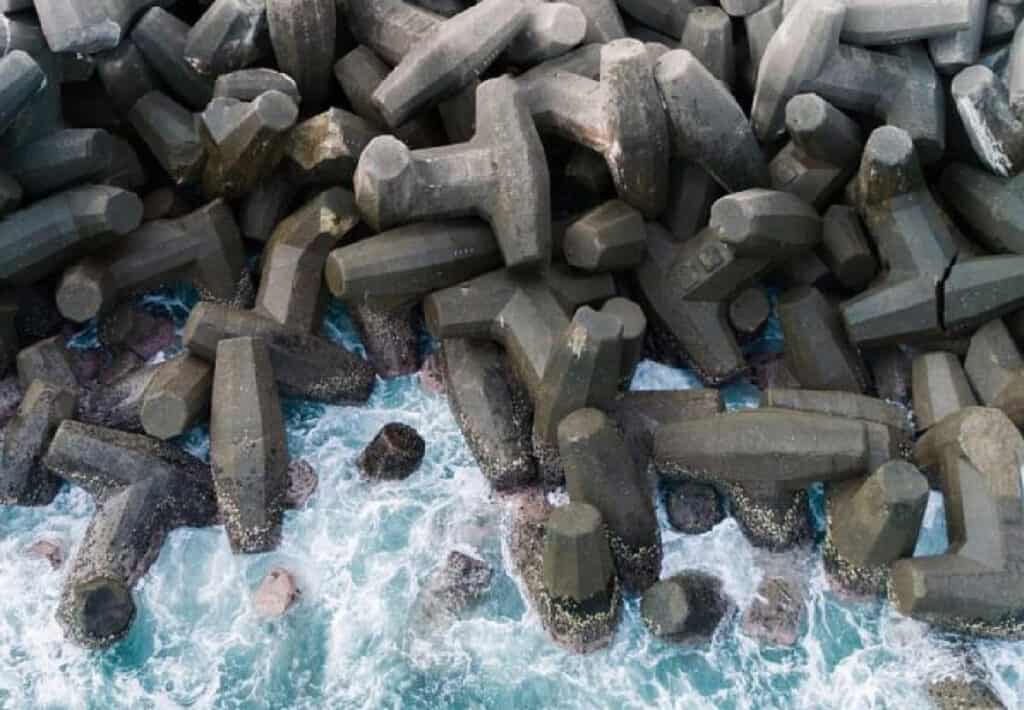
Also known as Dolos, these peculiarly shaped concrete blocks you see along coastal areas, were invented in South Africa. Eric Merrifield designed these structures to disperse wave action and protect harbour walls, buildings and streets. One dolos can weigh as much as 20 tonne, which makes this quite a weighty invention!
CAT Scan

The Computed Axial Tomography Scan or CAT or better known CT-Scan was developed by Cape Town physicist Allan Cormack and his associate Godfrey Hounsfield. He provided the mathematical technique for the CAT scan, in which an X-ray source and electronic detectors are rotated about the body and the resulting data is analysed by a computer to produce a sharp map of the tissues within a cross-section of the body. This resulted in a Nobel Prize in Physiology and Medicine.
Oil from Coal (Sasol)

When the South African government realised that South Africa had minimal oil reserves, this led to the South African Coal Oil and Gas Corporation (Sasol). Sasol is the world’s first – and largest – oil-from-coal refinery and it provides 40% of the country’s fuel.
Speed Gun

Henri Johnson invented the Speedball in 1992. The device accurately measures the speed and angles of speeding objects such as cricket and tennis balls.
Smartlock Safety Syringe
Invented in 90’s by a group of designers from the Vaal University of Technology.While at the Vaal University of Technology in South Africa, William Blake, Paul Lambourn, Jose loureiro, Michael Moore, David Shiel, Mirko Tappero, Henk van der Meyden and Alexis Wadman invented the Smartlock safety syringe. The syringe provides improved protection against the transmission of bloodborne diseases such as Ebola and HIV through needle-stick injuries. Once used, the Smartlock Safety Syringe’s barrel, needle and plunger are pulled inside the sheath and locked in a retracted position. Once locked, it is no longer possible to put the syringe back together. This invention has saved countless lives.
First Heart Transplant
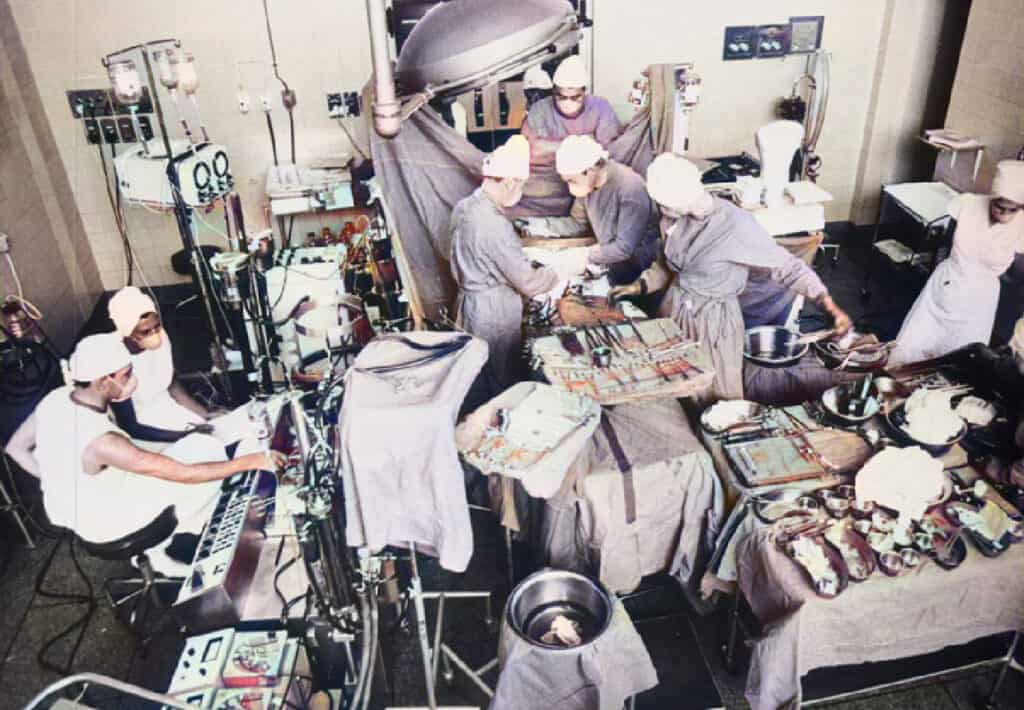
The world’s first heart transplant was performed by Dr Chris Barnard in Cape Town on 3 December 1967. The patient Louis Washkansky was suffering heart failure at the time and Dr Barnard took the chance to operate him. After that, Barnard became an international celebrity. He went on to perform more than 10 other heart transplants, with one of the recipients surviving a further 23 years.
Q20 Lubricating Spray

Mr. Robertson in Pinetown South Africa. Q20 is an all purpose lubricating spray that is owned by the Triton-Leo Group (Pty) Ltd
3D Printed Bone Transplant
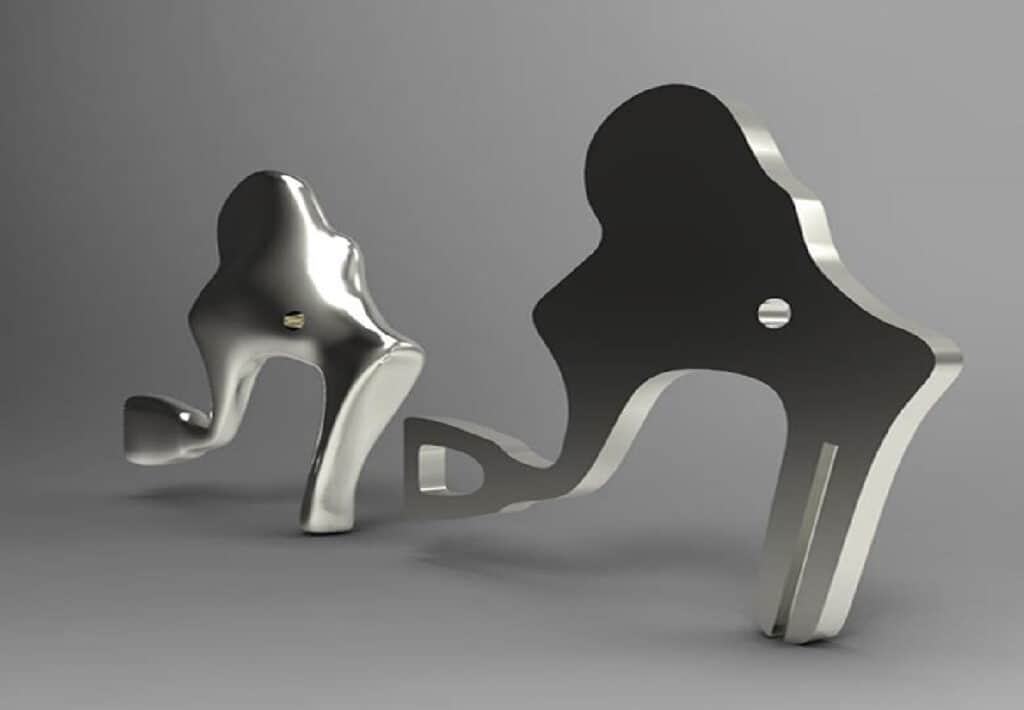
The first 3D-printed middle ear bones, developed by Professor Mashudu Tshifularo and his team at the University of Pretoria (UP) Faculty of Health Sciences
“3D technology is allowing us to do things we never thought we could,” says Prof Tshifularo, who is head of the Department of Otorhinolaryngology at UP. “
Solar Panels

Economical Solar Power
Solar power became five times cheaper thanks to the thin-film solar module technology developed by Professor Vivian Alberts at the University of Johannesburg’s Physics Department back in 1993.
The new thin-film panels are just 3 microns (0.005mm) thick – making mass production simpler and more cost-effective.
Engineering in South Africa will continue to pioneer ahead in design and innovation on a global scale.